With cases of the so-called “UK superflu” rising across the country, many drivers are asking the same question: is it still safe – or even legal – to get behind the wheel when you’re unwell?
While there’s no specific law banning flu sufferers from driving, motorists can face penalties if their symptoms or medication affect their ability to control a vehicle.
 With 'superflu' surging across the
UK, drivers are asking if they can still drive? Photo by Vitaly
Gariev on Unsplash
With 'superflu' surging across the
UK, drivers are asking if they can still drive? Photo by Vitaly
Gariev on Unsplash
What is the ‘superflu’? Symptoms drivers should look out for
The so-called “superflu” is not an official medical term, but a nickname given to a particularly severe seasonal flu strain circulating in the UK. Symptoms tend to be stronger and longer-lasting than a standard cold, leaving many people temporarily unable to function normally.
Common symptoms include:
-
High fever
-
Severe fatigue and weakness
-
Persistent coughing
-
Sore throat and congestion
-
Headaches and facial pressure
-
Muscle aches
-
Dizziness or feeling faint
-
Poor concentration or brain fog
While you may feel able to drive with mild cold symptoms, the “superflu” can cause significant impairment, affecting reaction times, awareness and judgement. These symptoms alone can make driving unsafe.
Is it legal to drive with flu? What the law says
The UK’s driving laws do not list flu as a condition that automatically bans you from driving. However, the Highway Code is clear: you must be fit to drive.
Under Section 92 of the Road Traffic Act, it is an offence to drive “in a position where you are unable to have proper control of the vehicle”.
This means:
-
If your symptoms – such as heavy coughing, fever or dizziness – impair your ability to drive safely, you could be prosecuted.
-
If you cause a collision while knowingly unwell or impaired, you may face more serious charges, including careless or dangerous driving.
In short: you can legally drive with mild flu, but only if you are well enough to remain fully in control of the vehicle.
Cold and flu remedies could put you at risk of drug-driving
Many over-the-counter medicines contain ingredients that can cause drowsiness, slowed reaction times or reduced concentration. Taking these before driving can put you at risk of committing a drug-driving offence, even if the medicine is legal and purchased in a supermarket.
Some common medications that may impair driving include:
-
Night-time cold and flu relief sachets
-
Antihistamines
-
Cough syrups containing codeine
-
Strong decongestants
-
Combination flu tablets
If a medicine can make you sleepy, dizzy or unfocused, you could be judged unfit to drive.
Always check labels for warnings such as:
-
“May cause drowsiness.”
-
“Do not operate machinery or drive if affected.”
If police stop you and believe your driving is impaired, you can be breath-tested, field-tested or taken for a blood test — even if the substance is a legal medication.
Bottom line for drivers
You can legally drive while suffering from the UK’s “superflu”, but only if you are medically fit to do so and not taking any remedy that impairs your ability to drive safely. If symptoms are affecting your concentration, vision, alertness or coordination, the safest and most legally sensible choice is to stay off the road until you’re well again.
Scale of the current flu ('superflu') surge in the UK
Latest NHS figures available (12/12/2025) (hospitalisation data is the most reliable real-time indicator currently reported).
| Metric | Value (England, latest week) | Comparison (Same Time Last Year) | Comparison (2023) |
|---|---|---|---|
| Average daily hospital flu patients | ~2,660 | ~1,861 | ~402 |
| % increase in hospital flu cases (week-on-week) | +55% | n/a | n/a |
| Cumulative flu hospital attendances (8-week period) | ~7,781 | ~1,850 | n/a |
| Increase in ED flu-like illness attendance | +320% year-on-year | n/a | n/a |
- For guidance only. Check with a medical professional before driving, and check information leaflets on medications before driving.
-
HEALTH-RELATED GUIDES FOR DRIVERS
-
Do you have to report high blood pressure to the DVLA before driving?
Find out when you must notify the DVLA about hypertension or other health issues that could affect your ability to drive.
-
How to beat amaxophobia – the fear of driving
A guide to understanding and overcoming the anxiety disorder that stops some people from getting behind the wheel.
-
Do I have to tell the DVLA I wear glasses or contact lenses?
Explains the 01 eyesight code on your licence and when you must declare vision correction to the DVLA.
-
Do I have to tell the DVLA I have floaters or flashers in my eyes?
Covers whether common eye issues like floaters or flashers must be reported to the DVLA, and what that means for driving.
Subscribe for free motoring and travel news here - support independent journalism
Most read motoring content
Take a look at more of our top motoring-related content here...
-
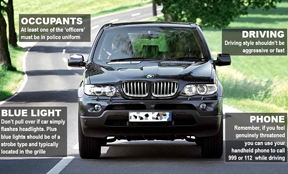
How to spot a fake undercover police car
-
Do I need to pay the Dartford Crossing charge on Sundays?
-
Will I get a speeding ticket after being flashed
-
Do I need an international driving permit for France and Spain
-
Secret parking offences you're committing revealed
-
Alternative routes for beating jams on the M25
-
Alternative routes for the M1 motorway
-
Alternative routes for the M6 motorway
-
How old are my tyres - find out instantly here
-
What are the black dots on my windscreen for?
-
Are my sunglasses legal for driving?
 Share
Share Tweet
Tweet Pin
Pin Email
Email Share
Share Share
Share
Author: Pete Barden:
Twitter: @pete_barden
Pete Barden is a qualified journalist who has written and produced for publications including The Sun (thesun.co.uk), New Statesman Media Group, Whatcar? (Whatcar.com) Stuff Magazine (Stuff.tv), Fastcar Magazine (Fastcar.co.uk), Maxim Magazine and UK broadcast stations within the Heart network (Formerly GCAP). Pete specialises in motoring and travel content, along with news and production roles. You can find out more about Pete Barden on LinkedIn.