The Government has confirmed it is bringing in a pay-per-mile tax for electric vehicle drivers, officially known as Electric Vehicle Excise Duty (eVED), set at 3p per mile for EVs and 1.5p per mile for hybrid models. This will change the way millions of motorists pay to use the road network — and could add around £250 a year to the running costs of a typical EV.
This guide explains, from what we currently know, how the system will work, why it’s being introduced, and how much it could cost based on real-world mileage examples.
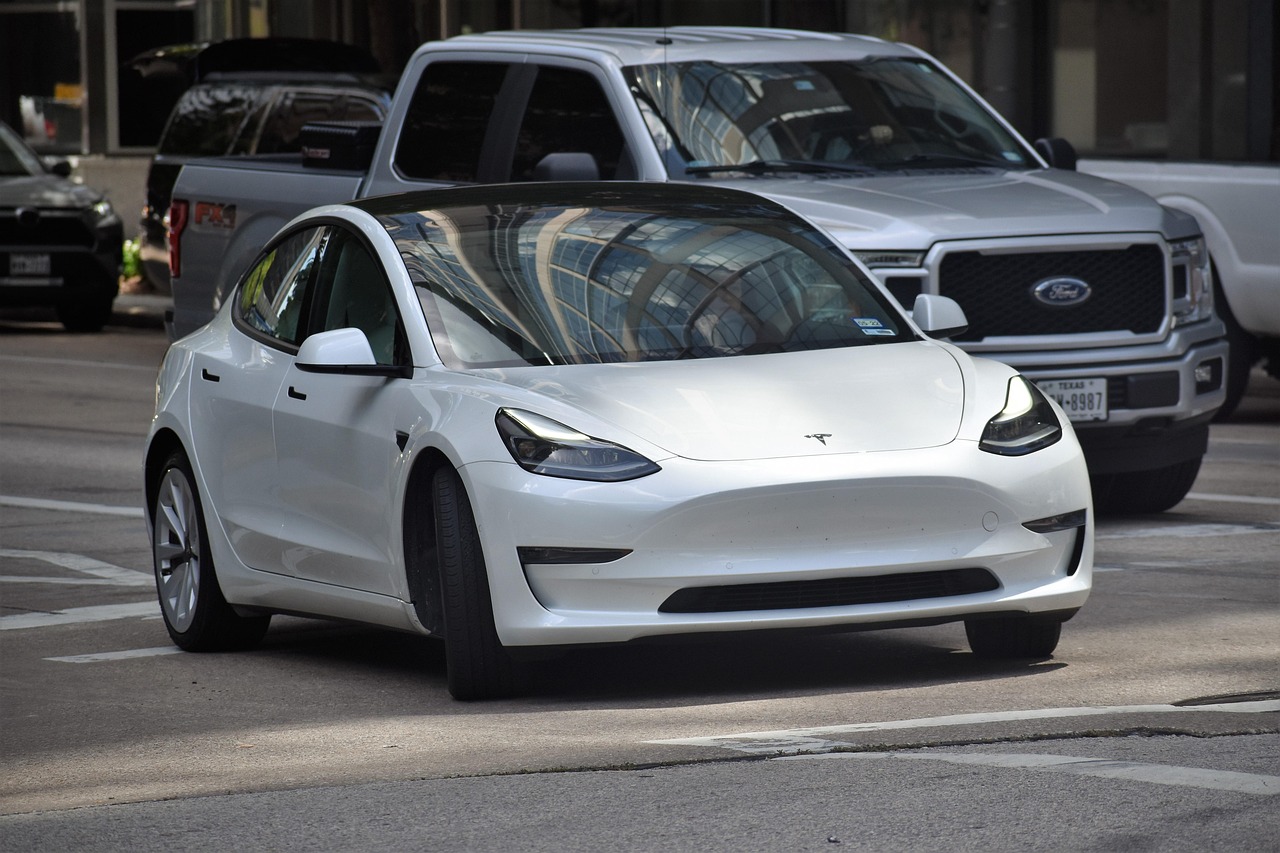 The Government is bringing in a pay-per-mile tax for electric vehicle drivers,
potentially set at 3p per mile (Image by F.
Muhammad from Pixabay)
The Government is bringing in a pay-per-mile tax for electric vehicle drivers,
potentially set at 3p per mile (Image by F.
Muhammad from Pixabay)
Why a pay-per-mile (eVED) system is being introduced
Electric vehicles currently pay far less in motoring taxes because they don’t contribute to fuel duty and, until 2025, have enjoyed reduced or zero-rated Vehicle Excise Duty (VED).
With EV numbers rising, the Treasury faces a growing gap in fuel-duty revenue. A per-mile system is seen as a way of ensuring all road users contribute fairly while keeping the system simple for drivers.
The proposal being discussed would apply from 2028, giving time for EV uptake to increase further before the road-pricing system is introduced.
How the pay-per-mile EV tax will work
The model being introduced is designed to avoid tracking drivers or monitoring journeys in real time.
Instead:
-
Drivers will estimate their annual mileage at the point of renewing their VED.
-
They will pay the per-mile charge upfront alongside standard VED.
-
At the end of the year, actual mileage would be confirmed.
-
Any difference would be carried forward (if under the estimate) or topped up (if over).
This is essentially a VED-plus system rather than full road-pricing technology.
Will electric vans, buses, motorcycles, HGVs and coaches have to pay the new tax?
Other vehicle classes — including electric or hybrid vans, buses, motorcycles, coaches and HGVs — won’t be covered by the pay-per-mile eVED at launch, as their shift to electric power is still far behind that of passenger cars.
When will the pay-per-mile tax start for EVs?
Rachel Reeves has confirmed the charges will come into effect from April 1, 2028.
Will eVED replace the existing VED paid?
No, drivers will pay for their mileage alongside their existing VED, if applicable.
How will mileage be checked under the new EV pay-per-mile tax
The government will verify mileage using odometer readings logged at each MOT, with interim checks for newer cars to bridge the gap until MOTs begin. Motorists won’t pay for these early checks.
At this point, drivers may need to pay more if they have travelled more miles than they estimated, or or have a credit rolled over to the following period if they've covered fewer than expected.
What drivers could pay: cost breakdown at 3p per mile
The table below shows how much the new tax would add to yearly running costs at different mileages.
| Annual mileage | Extra cost at 3p per mile | Notes |
|---|---|---|
| 6,000 miles | £180 | Typical for light users and short commutes |
| 8,000 miles | £240 | Common for many family vehicles |
| 8,900 miles | £267 | Around the current average annual EV mileage |
| 10,000 miles | £300 | Longer commutes and regular weekend trips |
| 12,000 miles | £360 | High-mileage private drivers and business use |
For most EV owners, this becomes a new fixed cost on top of VED, insurance, maintenance and charging. Halve the above examples for hybrid vehicles .
Real-life examples of how it will impact EV drivers
Occasional commuter – 6,000 miles a year
A driver covering short work journeys and local trips will face around
£180 extra.
For those already benefiting from low home-charging costs, the impact is noticeable but unlikely to
significantly change running-cost calculations.
Standard household user – 8,000 miles a year
This scenario adds around £240 a year.
For many, this becomes the equivalent of an extra electricity bill or insurer
surcharge, and it narrows the gap between EV and petrol costs.
High-mileage commuter – 10,000 to 12,000 miles a year
This group will pay £300 to £360 annually.
These drivers currently gain the biggest savings from switching to electric,
especially when charging at home. A per-mile tax reduces the financial advantage most for this group.
Business user driving 15,000+ miles
At higher mileages, the numbers start to look more like traditional
fuel duty in scale.
A driver doing 15,000 miles will face £450 a year
– a meaningful running cost that fleets, delivery drivers and field-based workers would need to budget
around.
Key concerns around the pay-per-mile proposal
Several issues are likely to generate debate as the system moves forward:
-
Impact on EV adoption: any new cost risks slowing the switch to electric at a critical moment.
-
Fairness for rural drivers: motorists in rural areas tend to clock up more miles and have fewer alternatives.
-
Accuracy of estimates: without real-time tracking, the system relies on manual declarations and odometer checks. And how will it be verified as new vehicles don’t have MOTs for three years
-
High-mileage penalty: those doing the most miles currently get the biggest EV savings; the new system reduces this benefit.
Will the new tax reduce EV running-cost advantages?
For most drivers, yes — but not enough to make EVs more expensive than petrol cars overall.
Home-charged electricity is still significantly cheaper per mile than petrol or diesel. Even with a 3p per-mile tax:
-
A typical EV running on home charging still costs less than half the equivalent petrol running cost.
-
Drivers using rapid public chargers will feel the squeeze more, especially combined with higher VAT rates and rising tariff prices.
The new system will not remove the financial benefit of EV ownership, but it will narrow it — especially for those who drive the most.
What drivers could do now
EV owners and shoppers can start preparing by:
-
Calculating their typical annual mileage and budgeting for an extra 3p per mile.
-
Comparing home-charging vs public-charging costs.
-
Consider future running costs when choosing between EV models.
-
Keeping an eye on policy updates as the Government moves closer to a formal announcement.
Will pay-per-mile reduce second-hand EV prices?
One of the big questions hanging over the proposed pay-per-mile scheme is what it will do to the resale values of electric cars. Buyers weighing up whether to switch to an EV are already cautious about battery longevity and charging infrastructure – add a running cost linked to mileage, and demand for used models could weaken even further.
If motorists believe EVs will become significantly more expensive to run, many may simply stick with petrol or hybrid cars for longer. That reduced appetite for second-hand electric vehicles could push down prices, leaving current owners facing greater depreciation than expected.
More on electric vehicles and clean air
-
EVs and the London congestion charge
-
Electric van licence rules
-
One-pedal driving explained
-
Charging EVs in flats
-
EV charging at airports
-
EV range in hot weather
-
How to charge electric cars in the UK
-
Should you buy an electric car?
-
How to hire an electric car
-
Electric car licence and test rules
-
Most popular electric cars in the UK
-
EV charging in France for UK drivers
Subscribe for free motoring and travel news here - support independent journalism
Most read motoring content
Take a look at more of our top motoring-related content here...
-
How to spot a fake undercover police car
-
Do I need to pay the Dartford Crossing charge on Sundays?
-
Will I get a speeding ticket after being flashed
-
Do I need an international driving permit for France and Spain
-
Secret parking offences you're committing revealed
-
Alternative routes for beating jams on the M25
-
Alternative routes for the M1 motorway
-
Alternative routes for the M6 motorway
-
How old are my tyres - find out instantly here
-
What are the black dots on my windscreen for?
-
Are my sunglasses legal for driving?
 Share
Share Tweet
Tweet Pin
Pin Email
Email Share
Share Share
Share
Author: Pete Barden:
Twitter: @pete_barden
Pete Barden is a qualified journalist who has written and produced for publications including The Sun (thesun.co.uk), New Statesman Media Group, Whatcar? (Whatcar.com) Stuff Magazine (Stuff.tv), Fastcar Magazine (Fastcar.co.uk), Maxim Magazine and UK broadcast stations within the Heart network (Formerly GCAP). Pete specialises in motoring and travel content, along with news and production roles. You can find out more about Pete Barden on LinkedIn.