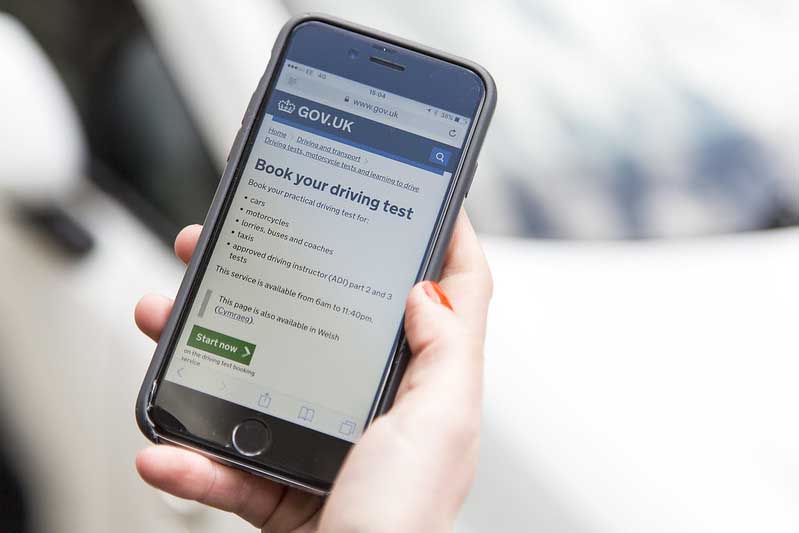
New driving tests are released at 6am every Monday, with appointments added 24 weeks ahead. But earlier cancellation appointments can appear at any time during the week, so there is no single best time to check.
 What day and time are driving tests
released? (Credit: gdsteam)
What day and time are driving tests
released? (Credit: gdsteam)
-
TABLE OF CONTENTS
-
What day are new driving tests released online?
-
What time on a Monday are driving tests released?
-
How long is the wait for a driving test?
-
Top ten driving test pass rates by centre
-
When is the best and worst month to pass your driving test?
-
Top ten lowest driving test pass rates by centre
-
Where can I book a theory test online?
-
Are theory test being taken remotely online?
-
Can I change my current test for an earlier one?
-
How to contact the DVSA?
-
What do I need to take to my driving test?
-
Scroll down for even more information
-
Driving test pass rates by year and month
What day are new driving tests released on the website?
The DVSA says new driving test slots are released on a Monday - for the following 24-week period. Availability varies between test centres so it advises candidates to keep looking regularly for a suitable date and time. Widening to other test centres can improve your chance of getting an earlier test date.
Confirming the Monday morning release date on 4 October, a spokesperson for the DVSA said: "If we have availability for the next 24 week window these will be on the system ready to book on a Monday, however please note it is a live booking system so cancellations can appear at any time."
The DVSA has previously also said: “Availability varies between test centres so we advise you to keep looking regularly for a suitable date and time,”
The agency added: “You may want to widen your search to other test centres.”
What time on a Monday are driving tests released?
You'll need to be up early to take advantage of the new driving test slots being released on a Monday morning each week, a spokesperson for the DVSA told Pete Barden Motoring News: "We tend to release dates first thing in the morning. I would advise you to check from 6am when our online system opens."
So start checking from 6am on a Monday if you want to grab a slot within the following 24-week period.
FREE UPDATES ON DRIVING TESTS AND OTHER MOTORING NEWS
When is the best time to find a cancelled driving test?
There is no single best time. DVSA says earlier appointments can become available at any time during the week when another learner changes or cancels their test, or when extra examiner availability is added.
New driving test booking rules in 2026
Changes to Learner Driving in England and Wales
The government has introduced new rules that change how soon learner drivers can take their practical test. These measures are part of a wider road safety strategy aimed at reducing accidents and giving new drivers more time to gain experience on the road.
What is the government proposing?
The Government is considering introducing a minimum learning period for learner drivers in England and Wales before they can take their practical driving test.
How long would the learning period be?
The Department for Transport is consulting on whether there should be a minimum of three months or six months between passing the theory test and taking the practical test.
Who would this apply to?
The proposed minimum learning period would apply to learner drivers, including those learning with a professional instructor and those getting additional practice with family or friends.
Why is this being proposed?
The aim is to give learner drivers more time to build up experience in different conditions, including at night, in bad weather and on busy roads, before taking their practical test.
What is the safety aim?
The proposal forms part of the Government’s wider road safety strategy, which aims to reduce deaths and serious injuries on Britain’s roads by 65% over the next decade, with a 70% reduction among under-16s.
What evidence supports the plan?
The Government says research from other countries suggests minimum learning periods can reduce collisions involving new drivers by up to 32%.
How would this change things in practice?
A minimum learning period would mean learner drivers could no longer pass their theory test and then take their practical test just days later.
For someone who passes their theory test shortly after turning 17, a three-month minimum would mean waiting until around 17¼ before taking the practical test, while a six-month minimum would mean waiting until around 17½.
Is this linked to graduated driving licences (GDLs)?
No. The Government is considering the minimum learning period separately from graduated driving licences, which could include restrictions on things such as night-time driving or carrying young passengers.
Are there other road safety measures being considered?
Yes. The wider road safety strategy includes proposals and work on a number of other measures, including possible changes to drink-driving laws and further research into issues such as headlight glare and road safety technology.
However, these should not be treated as confirmed changes until the Government announces them.
When could the minimum learning period happen?
The proposals must go through consultation and any necessary legislation before they can become law. There is currently no confirmed date for when a minimum learning period would come into force.
Only learners can now book and manage their driving test
This change is already in force.
Since 12 May 2026, only the learner driver can book or manage a car practical driving test. Driving instructors, third-party websites and apps cannot book or change a test on a learner's behalf.
Learners can only make two changes to a test
Since 31 March 2026, learners can make a maximum of two changes to a booked car practical driving test.
A change can include moving the date or time, changing the test centre or swapping the test for another available appointment.
If you need to make a third change, you will have to cancel the existing test and book a new one.
You can only change to nearby test centres
Since 9 June 2026, learners can only change a car practical test to one of their three nearest test centres.
The rule is designed to stop learners and unofficial services from moving bookings long distances in search of earlier appointments, helping to make tests more accessible to people who live locally.
These 2026 changes are already in place. They are separate from the proposed minimum learning period, which has not yet become law.
Why the DVSA is changing the booking system
The DVSA says these changes are being introduced to stop driving test “bots” and resellers snapping up appointments and selling them on at inflated prices, which has made it harder for genuine learners to find tests.
By limiting who can book, restricting changes and keeping tests local, the DVSA aims to reduce abuse of the system, cut waiting times and make booking a driving test fairer.
What it means for learners
You’ll need to book and manage your own driving test, so it’s important to be ready before you secure a slot. You’ll also need to think carefully before making changes, as you’ll only get two chances to alter your booking.
The upside is that fewer tests should be taken out of circulation by resellers, improving availability for learners who are genuinely test-ready.
How long is the wait for a driving test?
Learner drivers are still facing long waits for practical driving tests, although the length of the wait varies depending on where you live and the availability of appointments at your local test centre.
The latest DVSA figures show that half of learners who took a car driving test in July 2026 waited no more than 11.1 weeks between booking their test and taking it.
The DVSA says waiting times have been affected by high demand for driving tests, as well as the disruption caused by previous industrial action by driving examiners.
The agency has also said that demand has been higher than forecast, putting additional pressure on the test system.
Another factor is that some learners book tests before they are ready to take them. This can lead to appointments being changed or cancelled and can add further pressure to the booking system.
The DVSA is continuing to increase test availability, including by using overtime and out-of-hours appointments.
However, there is no single nationwide waiting time. How long you have to wait depends on your local test centre and the appointments available when you book.
The latest figures should therefore be used rather than older estimates suggesting learners routinely face waits of 20 weeks or more.
For the latest information on available appointments, learners can check the official DVSA booking service.
Latest DVSA driving test snapshot - July, 2026
| 197,295 Tests conducted |
102,862 Tests passed |
52.1% Pass rate |
| 32,110 Overtime test slots |
20.2 weeks 10%+ availability |
11.14 weeks Median booking-to-test wait |
Driving test waiting time information by region
| Region | Average Wait Time (weeks) | Shortest Wait Time (weeks) | Longest Wait Time (weeks) |
|---|---|---|---|
| South East | 23.00 | 2 | 24 |
| Greater London | 17.00 | 2 | 17 |
| South West | 21.86 | 13 | 24 |
| East of England | 20.00 | 12 | 22 |
| West Midlands | 18.50 | 10 | 20 |
| Yorkshire and the Humber | 19.00 | 11 | 21 |
| East Midlands | 22.00 | 14 | 23 |
| North West | 19.50 | 12 | 22 |
| Scotland | 20.50 | 14 | 23 |
| Wales | 21.00 | 15 | 24 |
Table created by analysis from data sources including the AA Driving School Report and Gov.UK
Top 10 driving test pass rates by centre
Here are the UK driving test centres with the top pass rates, according to a study from Howden Insurance. Useful data for candidates choosing which test centre they should book.
| Rank | Test Centre | Pass Rate |
| 1 | Montrose | 74.8 |
| 2 | Peebles | 74.2 |
| 3 | Hawick | 73.3 |
| 4 | Forfar | 72.6 |
| 5 | Lerwick | 70.1 |
| 6 | Girvan | 69.7 |
| 7 | Kelso | 69.3 |
| 8 | Stranraer | 68.5 |
| 9 | Fraserburgh | 66.3 |
| 10 | Kendal | 66.0 |
Top 10 best places in the UK to pass your driving test first time
Here are the top 10 driving test centres where you have the best chance of passing first time.
| Rank | Location | First-Time Pass Rate |
|---|---|---|
| 1 | Montrose | 69.6% |
| 2 | Forfar | 69.5% |
| 3 | Kendal | 69.1% |
| 4 | Arbroath | 68.4% |
| 5 | Newtown | 66.9% |
| 6 | Barrow-in-Furness | 66.9% |
| 7 | Fraserburgh | 64.8% |
| 8 | Chichester | 63.5% |
| 9 | Dorchester | 62.9% |
| 10 | Lancing | 62.5% |
Top ten lowest driving test pass rates by centre
Here are the top 10 driving centres with the lowest pass rates in the UK.
| Rank | Test Centre | Pass Rate % |
| 1 | Swindon | 21.5 |
| 2 | Speke | 32.0 |
| 3 | Doncaster | 32.5 |
| 4 | Erith | 32.8 |
| 5 | Belvedere | 33.5 |
| 6 | Wolverhampton | 35.5 |
| 7 | Featherstone | 37.4 |
| 8 | Rochdale | 37.5 |
| 9 | Wednesbury | 37.7 |
| 10 | Bury | 38.0 |
Driving test cancellation rule change means learners risk losing the full fee from April 2025
From 8 April 2025, the DVSA is extending the notice period needed to change or cancel a practical car driving test without being charged – and it's a big jump.
At the moment, learners can reschedule or cancel a test without penalty if they give at least three full working days' notice. But under the new rules, this will increase to 10 full working days – or you’ll lose the full test fee.
Where can I book a theory test online through an official website?
The theory test can be booked online here. It is important to book through the official Gov.UK site or you could pay more than you need to.
When making the booking, you will need the following information to hand:
- UK driving licence number
- email address
- credit or debit card
To take one of these exams for a car, you will need to have resided in England, Wales or Scotland for a minimum of 185 days in the past 12 months before the day you sit the theory or practical exam.
The charge for car and motor bike candidates is £23 and must be paid at time of booking the examination.
Are theory test being taken remotely online?
No. The examinations are held on site in an approved centre.
-
EV TEST: DO I NEED TO TAKE AN ELECTRIC CAR DRIVING TEST?
-
PRICE RISE: HOW MUCH IS THE DRIVING TEST GOING UP?
-
QUESTION TME: THE MOST COMMON DRIVING TEST QUESTIONS
-
TEST TALK : WEB CHAT CONTACT AT DVSA ABOUT DRIVING TESTS
What is being done about third-party booking sites buying up test slots?
Loveday Ryder of the DVSA also spoke out about third-party booking sites using 'bots' to scrape test centre websites to buy up slots as they become available, then sell them on at inflated prices - or even let them go to waste.
She confirmed that new anti-bot systems have been introduced to tackle this issue and help free up more tests for those who've previously had them cancelled or want to book a new one.
Can I change my current test date for an earlier one?
Yes. If you already have a practical driving test booked, you can check the official DVSA booking service for an earlier appointment if one becomes available.
There is no set time when earlier cancellations are released. They can appear at any time during the week when another learner changes or cancels their test, or when the DVSA adds new examiner availability.
However, new rules mean you can only make two changes to a booked car practical driving test. If you make a third change, you will have to cancel your existing test and book a new one.
You can also only move your test to one of your three nearest test centres.
To use this service, log on to the Gov.UK site here.
How to contact the DVSA?
You can find all contact details for the DVSA here.
What do I need to take to my driving test?
Candidates must take:
- their UK driving licence
- their theory test pass certificate, if you have it.
Are more men or women passing their driving test - and are pass rates going up (cars)?
| Metric and time period | Total | Female | Male |
|---|---|---|---|
| Tests Conducted: Jul to Sep 2022 | 412,714 | 197,547 | 215,069 |
| Tests Passed: Jul to Sep 2022 | 200,966 | 92,325 | 108,606 |
| Pass Rate (%): Jul to Sep 2022 | 48.7% | 46.7% | 50.5% |
| Tests Conducted (%): Annual change | +2.8% | +0.5% | +5.0% |
| Tests Passed (%): Annual change | +0.9% | -1.0% | +2.6% |
| Pass Rate (percentage points): Annual change | -0.9 | -0.7 | -1.2 |
Driving test pass rates by year and month
Have you ever wondered if there preferable month to take a practical driving test - giving you more chance of passing? The following data can help add some insight. Summer months would appear to be provide more passes by percentage, but look out for anomalies caused by the pandemic.
| Month | Tests Conducted | Tests Passed | Pass Rate |
|---|---|---|---|
| January 2025 | ~153,000 | ~74,800 | 48.9% |
| February 2025 | ~151,200 | ~73,800 | 48.8% |
| March 2025 | 162,259 | 79,541 | 49.0% |
| April 2025 | ~ (est.) | ~ (est.) | ~49.0% |
| May 2025 | ~ (est.) | ~ (est.) | ~49.0% |
| June 2025 | ~ (est.) | ~ (est.) | ~49.0% |
Pass rates
have stayed steady around 48.8–49.0%.
Data sourced from RAC and DVSA table DRT121G
When is the best and worst month to pass your driving test?
Working with the Gov.uk data above, which gives accurate test results over three previous years, analysis shows the following months are the best and worst for candidates achieving a pass:
- Best Month (Highest Average Pass Rate): February with an average pass rate of 52.8%.
- Worst Month (Lowest Average Pass Rate): November with an average pass rate of 47.5%.
 Share
Share Post
Post Pin
Pin Email
Email Share
Share Share
Share
Latest motoring news and guides
Take a look at more of our top motoring-related content here...
-
CAR TAX SHOCK: How much is my car tax going to go up by?
-
CHILLING: New AI speed cameras have arrived - here's what they can see in your car?
-
CAN I STILL DRIVE?: My driving licence has expired - can I keep driving while I wait for a new one?
-
INSURE AND SAVE: Here a six genuine - and legitimate - ways to cut UK car insurance premiums
-
DRIVERS IN 20MPH PERIL: How fast in a 20mph zone will get a speeding ticket in London
-
TOP EVS FOR BRITS: What is the most popular electric car (EV) for UK buyers 2022?
-
TESTING TIMES: What day of the week are driving tests released?
-
SECRET EXITS: What are secret exits on motorways like the M25 and can I use them
-
M25 JAM BUSTER: M25 alternative routes revealed
-
SECRET PARKING FINES: Secret parking offences you're committing but don't realise
-
PAVEMENT PERILS: Can you park on pavements in the UK and what are the fines if not?
-
SUNGLASSES SHOCK: Are my sunglasses legal for driving - how to check instantly?
-
NUMBER PLATES EXPLAINED: How old is a car by its number plate? Full list
-
SPEEDING TICKET CHECK: Will I always get a speeding ticket after being flashed
-
AVOID POINTS: Will I get a speed awareness course instead of points?
-
DRIVING ABROAD DOCUMENTS: Do I need an international driving permit for France, Spain, Greece and more
-
WHITE LINES EXPLAINED: What are the rules around double white lines and the risk of £1,000 fine?
-
BRUM: DEAL Do I pay the Birmingham Clean Air Zone at weekends?
-
GOT YOUR NUMBER: What does my driving licence number reveal about me?
-
FAKE COP SHOCK: How to spot a fake undercover police car
-
ELECTRIC LICENCE TO DRIVE: Do I need an electric car licence and driving test in the UK?
-
VAPE RULES: Can I vape in a car with kids in it?
-
LICENCE TIMES: When can I apply for a provisional licence?
-
E-SCOOTER LAWS: Are electric scooters Legal in the UK now? When is the law changing?
-
SLIDERS MUST-KNOW: Can I drive in sliders in the UK?
-
DOT CHECK: What are the black dots on my windscreen for?
-
CAR TRACKER: How can I find out who owns a car
-
CHARGE AND DRIVE: Electric car charging points at UK airports for public use - 2022
-
TYRE-CHECK TOOL: How old are my tyres - find out instantly here
-
CAR FUTURE: What happens to a car when the owner dies?
-
SPARE WHEEL RULES: How far and how fast can I drive on a space saver spare wheel
-
TICKET RISK: Can I be fined if the car park ticket machine is not working?
-
M6 JAM BUSTER: Is the M6 Toll Road free in the evening and at weekends?
-
PAY OR NOT PAY: How much is the Tamar Bridge toll and when do I need to pay it?